




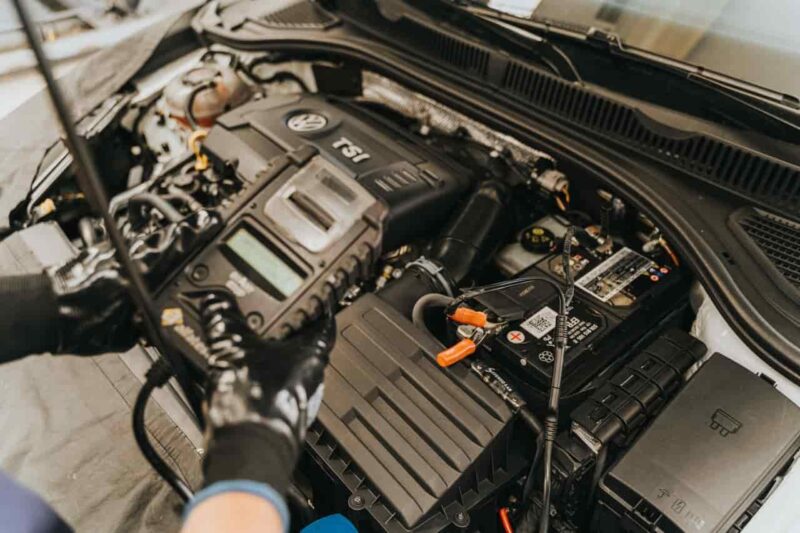
The engine control unit (ECU) is one of the most important electronic components in a modern vehicle. It monitors information from various sensors and controls critical engine functions such as fuel injection, ignition timing, air-fuel mixture, and emissions. When the ECU begins to fail, it can cause a wide range of engine and drivability problems.
Recognizing the symptoms of a bad ECU early can help you diagnose the problem before it leads to more serious or expensive repairs. Below are some of the most common signs that your vehicle’s ECU may be malfunctioning.
1. Check Engine Light Comes On
One of the most common symptoms of a bad ECU is an illuminated Check Engine Light. The ECU constantly monitors the engine and its sensors. If it detects an electrical fault, communication problem, or abnormal engine reading, it may activate the warning light.
However, a Check Engine Light does not automatically mean the ECU itself is faulty. A diagnostic scan can help identify whether the problem is related to the ECU, a sensor, wiring, or another engine component.
2. Engine Misfires
A faulty ECU can cause incorrect fuel injection or ignition timing, resulting in engine misfires. You may notice the engine running roughly, hesitating during acceleration, or shaking while idling.
Repeated misfires should not be ignored. Apart from reducing performance, they can potentially damage other engine components if the underlying problem is left unresolved.
Also Read: Symptoms of Bad Spark Plug
3. Poor Fuel Economy
If your vehicle suddenly starts using more fuel than usual, the ECU could be one possible cause. The ECU controls the amount of fuel delivered to the engine based on information from sensors.
A malfunctioning ECU may provide incorrect fuel calculations, causing the engine to run too rich or too lean. Before replacing the ECU, technicians should also check components such as the oxygen sensor, mass airflow sensor, fuel injectors, and fuel system.
4. Difficulty Starting the Engine
Starting problems are another potential symptom of a bad ECU. If the ECU cannot properly control fuel injection, ignition, or other starting functions, the engine may crank without starting.
In some cases, a faulty ECU may cause intermittent starting issues. The vehicle might start normally one day and fail to start the next. Battery, starter, immobilizer, fuel, and wiring problems should also be ruled out during diagnosis.
5. Poor Engine Performance
A malfunctioning ECU can affect overall engine performance. You may experience sluggish acceleration, hesitation, reduced power, or an inconsistent throttle response.
Because the ECU controls several engine functions simultaneously, an electronic fault can affect how the vehicle behaves under different driving conditions.
6. Rough or Unstable Idle
An engine that constantly struggles to maintain a smooth idle may have an ECU-related problem. The ECU regulates several factors that influence idle speed, including fuel delivery and airflow.
If the engine repeatedly stalls, surges, or idles unevenly, the problem could involve the ECU or another component controlled by it. A professional diagnostic scan is recommended to identify the actual cause.
7. Transmission Problems
In vehicles with electronically controlled automatic transmissions, the ECU or related control modules can influence gear shifting. An electronic control problem may result in harsh shifting, delayed gear changes, incorrect gear selection, or transmission warning lights.
Transmission problems can have many causes, so ECU failure should not be assumed without proper testing.
8. Unexpected Engine Stalling
Unexpected stalling is another warning sign that deserves attention. If the ECU temporarily loses the ability to control fuel injection or ignition, the engine may shut down while idling or driving.
Intermittent stalling can be particularly difficult to diagnose because the vehicle may operate normally after restarting. Fault codes, ECU power supply, grounds, wiring, and sensor signals should be checked carefully.
9. Communication or Diagnostic Problems
A failing ECU may have difficulty communicating with a diagnostic scanner or other vehicle control modules. In some cases, technicians may be unable to establish communication with the ECU at all.
This can indicate an ECU failure, but damaged wiring, poor electrical connections, blown fuses, low battery voltage, or communication network problems can produce similar symptoms.
10. Multiple Electrical or Engine Fault Codes
When an ECU develops an internal fault, it may generate several seemingly unrelated diagnostic trouble codes. You might see codes associated with different sensors or engine systems at the same time.
Multiple codes do not necessarily mean the ECU is defective. A wiring fault, voltage problem, or damaged ground connection can also cause several systems to report errors.
What Causes an ECU to Fail?
Several factors can contribute to ECU failure, including water or moisture damage, electrical surges, overheating, damaged wiring, corrosion, faulty sensors, and incorrect jump-start procedures. Age and prolonged exposure to extreme temperatures can also contribute to electronic component failure.
How to Diagnose a Bad ECU
Diagnosing a faulty ECU requires more than simply reading a fault code. A qualified technician should inspect the vehicle’s battery voltage, fuses, grounds, wiring, connectors, sensors, and communication circuits.
A professional diagnostic scan can identify stored trouble codes and provide useful information about the vehicle’s electronic systems. In some cases, ECU testing or bench testing may be necessary to determine whether the module itself has failed.
Final Thoughts
Understanding the symptoms of a bad ECU can help you identify potential electronic problems before they become more serious. Common warning signs include a Check Engine Light, engine misfires, poor fuel economy, starting difficulties, rough idling, poor performance, unexpected stalling, and communication errors.
Because many of these symptoms can also be caused by sensors, wiring, battery problems, or other engine components, it is important to get an accurate diagnosis before replacing the ECU. Proper testing can save time, prevent unnecessary repairs, and help ensure your vehicle receives the correct fix.
