




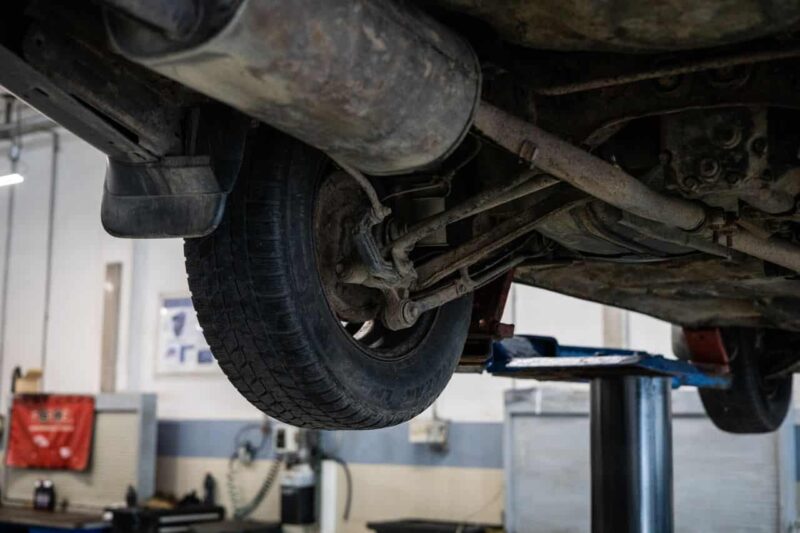
The suspension system is essential to the comfort, handling, stability, and safety of your Ford F-150. It helps absorb bumps, keeps the tires in contact with the road, and supports the truck under different loads and driving conditions. Over time, suspension components can wear out, particularly on trucks that regularly carry heavy loads, tow trailers, or travel over rough roads.
Recognizing suspension problems early can help prevent additional wear and maintain predictable handling. Whether your F-150 needs new shocks, worn bushings, ball joints, or other suspension components, proper diagnosis is the first step toward an effective repair.
Common Signs of F-150 Suspension Problems
Suspension problems can appear in several ways. Some symptoms are easy to notice, while others develop gradually.
Excessive Bouncing
If your F-150 continues bouncing after driving over a bump, the shocks or struts may no longer be controlling suspension movement effectively. Excessive bouncing can reduce tire contact with the road and affect handling.
Uneven Tire Wear
Suspension problems can contribute to abnormal tire wear. If one section of a tire is wearing faster than another, worn suspension components or an alignment problem could be responsible.
Vehicle Pulling or Drifting
A truck that pulls to one side may have an alignment issue, tire problem, or damaged suspension component. Suspension damage should be inspected before assuming an alignment alone will solve the problem.
Clunking or Knocking Sounds
A repetitive clunk, knock, or rattling sound when driving over bumps can indicate worn bushings, ball joints, control arms, sway bar components, or other suspension hardware.
Excessive Body Roll
If the truck leans more than usual while cornering, worn suspension or stabilizer components may be affecting its handling.
Uneven Ride Height
If one side of the F-150 sits noticeably lower than the other, a damaged spring or another suspension issue may be present. Ride-height changes can also affect alignment and tire wear.
Also Read: Ford F150 Transmission Slipping
Common F-150 Suspension Components
The F-150 suspension varies by model year and configuration, but several components commonly require inspection or replacement.
Shocks and struts control suspension movement and help maintain tire contact with the road.
Control arms connect suspension components to the vehicle frame and allow controlled movement.
Ball joints allow the steering and suspension components to move together while supporting suspension loads.
Bushings cushion movement between suspension components and reduce vibration and noise.
Coil springs and leaf springs support the vehicle’s weight and help determine ride height.
Sway bar components help control body movement during cornering.
Because suspension systems work as a group, failure of one component can sometimes accelerate wear in others.
How F-150 Suspension Problems Are Diagnosed
A proper suspension inspection should begin with the symptoms and driving conditions. A technician may inspect the tires, suspension components, steering system, ride height, and wheel alignment.
During a physical inspection, worn bushings, leaking shocks, damaged springs, loose components, and excessive movement can provide important clues. A road test may also help identify noises or handling problems.
It is important to determine the actual source of the problem before replacing parts. For example, uneven tire wear may result from alignment problems, worn suspension components, incorrect tire pressure, or a combination of factors.
F-150 Suspension Repair Cost
The cost of F-150 suspension repair depends heavily on the component that needs replacement, the truck’s model year, the type of parts selected, and labor rates.
Replacing a single worn component may be relatively affordable, while repairing multiple suspension components can become considerably more expensive. Shocks, springs, control arms, ball joints, and related hardware all have different parts and labor requirements.
Aftermarket replacement components can provide different price and performance options, while original-equipment parts may be preferred by owners who want specifications close to the factory setup.
When getting an estimate, ask whether the price includes parts, labor, alignment, inspection, and any related hardware.
When Should You Repair the Suspension?
Suspension repairs should not be ignored when they affect handling, steering, braking, or tire contact with the road. A minor noise may not indicate an immediate emergency, but persistent symptoms deserve inspection.
If your F-150 has severe steering instability, a broken suspension component, significant fluid leakage from a shock, or a wheel that appears loose or misaligned, avoid unnecessary driving until the truck has been inspected.
Addressing worn components early can also help prevent additional damage and uneven tire wear.
DIY or Professional F-150 Suspension Repair?
Some suspension maintenance can be performed by experienced DIY mechanics, but many repairs require specialized tools and careful procedures. Ball joints, springs, and other loaded suspension components can be particularly hazardous if handled incorrectly.
Always use appropriate lifting and support equipment when working underneath an F-150. Never rely solely on a hydraulic jack to support the truck.
If you are not experienced with suspension repairs, professional service is recommended. A qualified technician can diagnose the problem, install the correct replacement components, and perform a wheel alignment when required.
Final Thoughts
F-150 suspension repair is an important part of maintaining safe and comfortable truck performance. Excessive bouncing, uneven tire wear, pulling, unusual noises, excessive body roll, and changes in ride height can all indicate suspension problems.
The best approach is to diagnose the underlying cause before replacing parts. Regular inspections, timely repairs, and proper wheel alignment can help extend tire and suspension life while keeping your F-150 stable and predictable on the road.
