




When a slow season hits or a large order needs inventory up front, many small business owners get an offer promising “fast money, no credit check.” Most of the time, that offer is a merchant cash advance (MCA). The money can land in your account within a day or two, but it is also one of the most expensive forms of business funding available. This guide explains how an MCA really works, how to calculate its true cost, and what to check before you sign anything.
What Is a Merchant Cash Advance?
A merchant cash advance is not technically a loan. Instead, a funding company buys a portion of your future sales at a discount. You receive a lump sum today, and the provider collects a fixed total back by taking a slice of your daily or weekly revenue until the balance is paid in full.
Because it is structured as a purchase of future receivables rather than a loan, an MCA has historically fallen outside many lending rules, including state usury caps that limit interest rates. That legal gray area is a big reason the costs can run so high.
How Repayment Works
There are two common repayment structures:
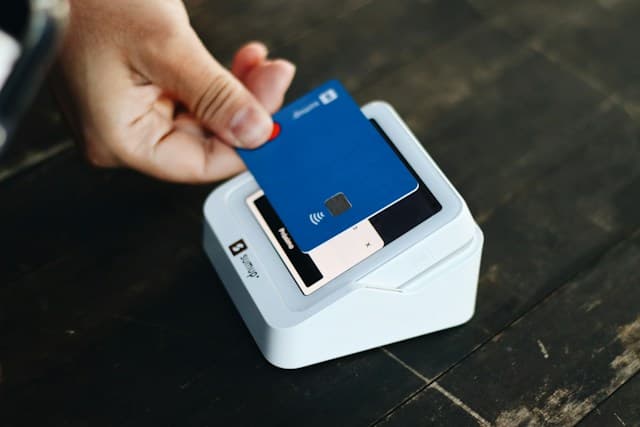
- Percentage of card sales (holdback): The provider takes a set percentage, often 10% to 20%, of your daily credit and debit card receipts, usually through your payment processor.
- Fixed ACH withdrawals: The provider debits a fixed dollar amount from your business bank account every business day or every week, based on your estimated revenue.
With a true holdback, payments shrink when sales slow down, which offers some flexibility. With fixed ACH debits, the payment stays the same even during a bad week, which can squeeze cash flow quickly.
Factor Rates vs. APR: The Real Cost
MCA providers rarely quote an interest rate. They use a factor rate, typically between 1.1 and 1.5. You multiply the advance by the factor rate to find the total payback.
For example, a $50,000 advance at a 1.35 factor rate means you repay $67,500. That $17,500 fee sounds like 35%, but the real annualized cost depends on how fast the money is collected. Repaid through daily payments over 12 months, the effective APR is roughly 63%. Over six months, it is about 126%. Over three months, it climbs to around 250%.
The faster your sales come in, the faster the provider collects, and the higher your effective APR. Unlike a traditional loan, paying early usually does not save you money, because the total payback is fixed from day one. Always ask whether an early payoff discount exists, and get it in writing.
Pros of a Merchant Cash Advance
- Speed: Approval and funding can happen within 24 to 72 hours.
- Easier approval: Providers focus on revenue and card volume rather than personal credit scores.
- Usually no collateral: You typically do not pledge equipment or real estate.
- Payments may flex with sales: With a percentage-based holdback, you pay less during slow periods.
Cons and Risks to Watch
- Very high cost: Effective APRs often reach triple digits.
- Daily cash drain: Frequent withdrawals reduce the working capital you need for payroll, rent, and inventory.
- Stacking: Some businesses take a second or third advance to cover the first, creating a debt spiral that is hard to escape.
- Aggressive contract terms: Watch for personal guarantees, confessions of judgment, and clauses that let the provider freeze accounts or redirect card receipts if you fall behind.
- No credit building: Many providers do not report on-time payments to business credit bureaus.
Some states, including California and New York, now require commercial financing providers to disclose an estimated APR and total cost. Even where that is not required, you can ask for the numbers and run the math yourself.
When an MCA Might Make Sense
An MCA can be reasonable in narrow situations: a short-term, high-return opportunity where the profit clearly outweighs the cost, such as buying discounted inventory you can resell quickly, or bridging a short gap while a cheaper loan is approved. It rarely makes sense for covering ongoing losses, paying off other debt, or funding long-term growth.
Questions to Ask Before You Sign
- What is the total payback amount and the estimated APR?
- Is repayment a percentage of sales or a fixed daily debit?
- Is there a reconciliation clause that lowers payments if revenue drops?
- Are there origination, underwriting, or administrative fees?
- Is there a personal guarantee or confession of judgment?
- Can I pay off early at a discount?
Cheaper Alternatives to Consider
Before accepting an advance, compare it against these options:
- SBA loans: Government-guaranteed loans offer some of the lowest rates and longest terms available to small businesses. You can review the programs on the U.S. Small Business Administration loans page.
- Business line of credit: You draw only what you need and pay interest only on the amount used.
- Invoice factoring: If you sell to other businesses on payment terms, you can turn unpaid invoices into cash. Our guide to invoice factoring for small business explains how it works and what it costs.
- Equipment financing: The equipment itself secures the loan, which usually means lower rates.
- Business credit cards: A 0% introductory APR card can cover short-term needs if you repay before the promotion ends.
Final Thoughts
A merchant cash advance trades cost for speed. For a business with strong card sales and a clear, short-term use for the money, it can work as a bridge. For most others, the daily withdrawals and triple-digit effective APR create more problems than they solve. Calculate the true cost, read every clause, and compare at least two cheaper alternatives before you sign.
This article is for educational purposes only and is not financial or legal advice. Speak with a qualified professional about your specific situation.
