



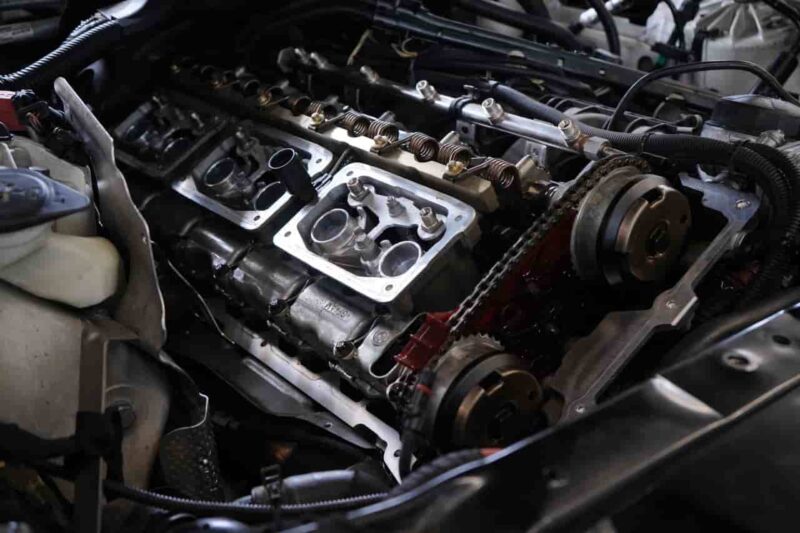
Honda Accord timing chain problems can cause serious engine performance issues if they are ignored. The timing chain synchronizes the movement of the engine’s crankshaft and camshaft, allowing the valves to open and close at the correct time. Unlike a timing belt, a timing chain is designed for long-term use, but it can still stretch, wear, or develop problems with its tensioner and guides.
Recognizing the warning signs early can help prevent expensive engine damage and keep your Honda Accord running reliably.
What Does the Timing Chain Do?
The timing chain connects the crankshaft to the camshaft and maintains precise synchronization between the engine’s pistons and valves. This synchronization is essential because the valves must open and close at specific points during each combustion cycle.
The timing chain operates under significant stress and depends on proper lubrication. Over time, the chain, guides, sprockets, and tensioner can wear. When timing changes, the engine may run poorly or, in severe cases, suffer internal damage.
Common Honda Accord Timing Chain Problems
1. Timing Chain Stretch
One of the most common timing chain problems is excessive wear or stretching. A timing chain does not usually stretch like a rubber band; instead, wear develops in the chain’s links and connecting components, increasing its effective length.
As the chain becomes longer, camshaft timing can move out of its intended position. This may cause rough running, reduced acceleration, poor fuel economy, or an illuminated check engine light.
2. Timing Chain Tensioner Failure
The timing chain tensioner maintains the correct amount of tension in the chain. If the tensioner becomes worn, weak, or damaged, the chain may become loose.
A loose chain can produce a rattling noise, particularly during startup. In severe cases, excessive slack can allow the chain to move out of position.
3. Worn Timing Chain Guides
Timing chain guides keep the chain properly aligned as it travels around the engine. These guides can wear or become damaged over time.
A damaged guide can increase chain movement and noise. If a guide breaks apart, debris may circulate through the engine’s lubrication system, potentially creating additional problems.
4. Low or Dirty Engine Oil
Timing chain components depend on engine oil for lubrication. Low oil levels, contaminated oil, or neglected oil changes can accelerate wear on the chain, tensioner, and related components.
If your Accord develops timing chain noise, checking the engine oil level and maintenance history should be part of the initial investigation.
Also Read: Automatic Transmission Not Shifting Properly
Symptoms of Timing Chain Problems
A rattling or metallic noise from the engine is one of the most recognizable symptoms. It may be especially noticeable during a cold start or immediately after the engine is started.
Other warning signs include rough idling, engine misfires, poor acceleration, reduced fuel economy, difficulty starting, and an illuminated check engine light.
If the chain has moved significantly out of position, the engine may run very poorly or fail to start.
Check Engine Light and Timing Codes
Modern Honda Accord models use sensors to monitor crankshaft and camshaft positions. When the engine computer detects that these components are not synchronized correctly, it can store diagnostic trouble codes.
Codes related to camshaft timing or crankshaft-camshaft correlation can point toward a timing issue. However, a diagnostic code does not automatically prove that the timing chain itself is defective.
A technician should inspect the entire timing system and consider other possible causes before replacing expensive components.
Can a Bad Timing Chain Damage the Engine?
Yes. A severely worn or incorrectly positioned timing chain can potentially cause major engine damage.
If the chain jumps timing, the pistons and valves may move out of synchronization. Depending on the engine design, this can allow the piston and valve to contact each other, resulting in bent valves or other internal damage.
For this reason, persistent timing chain noise or severe timing-related symptoms should not be ignored.
How Are Timing Chain Problems Diagnosed?
Diagnosis usually begins with checking the engine’s symptoms, maintenance history, oil condition, and diagnostic trouble codes. A technician may listen for abnormal chain noise and use a scan tool to compare camshaft and crankshaft timing information.
Additional inspection may be required to determine whether the chain, tensioner, guides, or sprockets are worn.
Because several engine problems can produce similar symptoms, replacing the timing chain without proper diagnosis is not always necessary.
Honda Accord Timing Chain Repair
If the timing chain is confirmed to be worn or damaged, repair may involve replacing the chain along with related components such as guides and the tensioner. In some situations, sprockets and other components may also require inspection or replacement.
Timing chain repairs can be labor-intensive because the components are located inside the engine. The exact repair procedure depends on the Accord’s engine and model year.
Using quality replacement components and following the manufacturer’s timing specifications is essential.
How to Prevent Timing Chain Problems
Although timing chains are designed to last a long time, proper maintenance can help extend their service life. Check the engine oil regularly and follow the recommended oil-change intervals.
Use the correct oil specification for your particular Accord and address low oil levels or oil leaks promptly. Do not ignore unusual rattling noises, especially when they occur during engine startup.
Regular maintenance also makes it easier to identify developing problems before they become major failures.
Final Thoughts
Honda Accord timing chain problems can range from chain and guide wear to tensioner problems and lubrication-related damage. Warning signs such as startup rattling, rough running, misfires, poor performance, and timing-related check engine codes deserve attention.
A timing chain failure can potentially cause severe engine damage, so early diagnosis is important. If your Accord develops persistent timing-related symptoms, have the engine inspected by a qualified technician rather than continuing to drive and hoping the noi
