



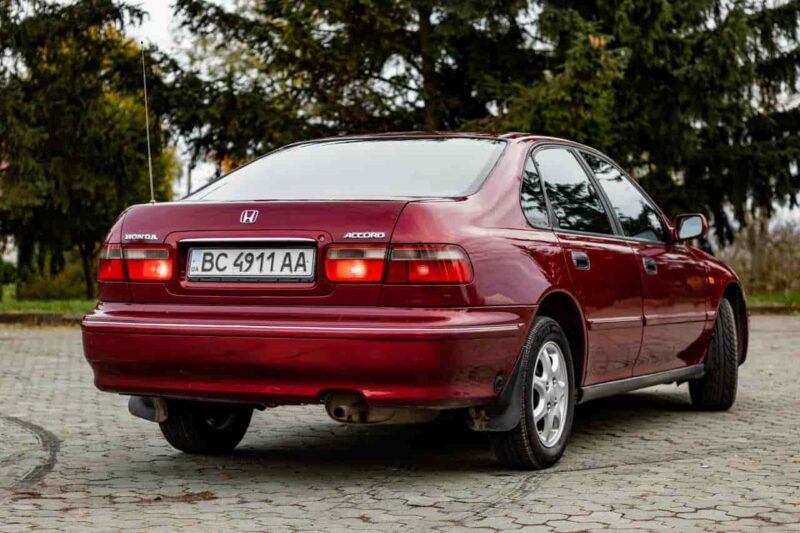
Honda Accord CVT transmission issues can affect acceleration, smoothness, fuel economy, and overall driving performance. Continuously variable transmissions are designed to provide smooth power delivery and efficient operation, but they still require proper maintenance and can develop problems as mileage increases.
Recognizing early warning signs can help prevent a minor transmission problem from becoming an expensive repair. If your Accord experiences shuddering, slipping, delayed acceleration, unusual noises, or transmission warning lights, it is important to investigate the cause.
What Is a CVT Transmission?
A continuously variable transmission, or CVT, uses a system of pulleys and a belt or chain rather than conventional fixed gears. The transmission continuously changes its ratio to keep the engine operating efficiently.
This design can improve fuel economy and provide smooth acceleration. However, CVTs are sensitive to fluid condition, overheating, and wear. Following the correct maintenance requirements is particularly important.
Common Honda Accord CVT Transmission Issues
1. CVT Shuddering
One common symptom is shuddering or vibration during acceleration. The vehicle may feel as though it is briefly shaking or hesitating when moving away from a stop or accelerating at low speeds.
Several problems can cause this behavior, including deteriorated transmission fluid, internal wear, or other transmission-related issues. A proper diagnosis is necessary before determining the repair.
2. Delayed Acceleration
A Honda Accord with a CVT problem may hesitate before responding when the accelerator is pressed. The engine may rev while the vehicle takes longer than expected to accelerate.
Delayed acceleration can also have engine or electronic causes, so it should not automatically be attributed to the transmission.
3. Transmission Slipping
Although CVTs operate differently from traditional automatic transmissions, drivers may describe abnormal ratio changes or a loss of power as slipping.
If engine RPM rises unexpectedly without a corresponding increase in vehicle speed, the transmission should be inspected. Continuing to drive with a serious transmission problem can increase internal wear.
4. Whining or Unusual Noises
A CVT may naturally produce sounds that differ from those of a conventional automatic transmission. However, a new, unusually loud whining, humming, grinding, or buzzing noise can indicate a problem.
Low or degraded transmission fluid, bearing wear, pulley problems, or other internal issues may contribute to abnormal sounds.
Also Read: Silverado Lifter Failure Symptoms
5. Transmission Overheating
Excessive heat is harmful to transmission components and fluid. Heavy loads, extreme operating conditions, inadequate cooling, or internal problems can contribute to high transmission temperatures.
Overheating may cause performance changes and accelerate fluid degradation. If an overheating warning appears, the vehicle should be inspected promptly.
CVT Fluid Problems
Transmission fluid plays an important role in CVT operation. It lubricates components, helps control hydraulic pressure, and provides the friction characteristics required by the transmission.
Using the wrong fluid can cause improper operation or accelerated wear. Honda Accords equipped with a CVT should use the fluid specification required for the specific model and transmission.
Transmission fluid should also be serviced according to the appropriate maintenance schedule and operating conditions. Avoid assuming that conventional automatic transmission fluid is suitable for a CVT.
Check Engine or Transmission Warning Light
An illuminated check engine or transmission-related warning light can indicate an electronic or mechanical problem. Sensors monitor transmission operation and communicate information to the vehicle’s computer.
Diagnostic trouble codes can provide useful information, but a code does not necessarily identify the failed component by itself. Professional testing may be required to determine the underlying cause.
How CVT Problems Are Diagnosed
Diagnosis typically begins with a road test and inspection of transmission fluid and stored diagnostic codes. A technician may monitor transmission data, operating temperatures, pressure readings, and engine performance.
The technician may also check for fluid leaks, wiring problems, sensor faults, software-related issues, and mechanical wear.
Accurate diagnosis is important because symptoms such as hesitation, vibration, or poor acceleration can originate from the engine, drivetrain, or transmission.
Can You Drive With CVT Problems?
Driving with minor symptoms may be possible temporarily, but ignoring worsening transmission problems can increase repair costs. A vehicle that suddenly loses acceleration, makes severe noises, overheats, or enters a reduced-power mode should not continue operating normally.
If the transmission is slipping severely or the vehicle cannot accelerate safely, stop driving and arrange professional assistance.
Honda Accord CVT Repair Options
The appropriate repair depends on the cause. A fluid service may be sufficient for certain maintenance-related problems, while electrical or sensor issues may require component replacement or software-related diagnosis.
More serious internal damage involving pulleys, bearings, belts, chains, or other transmission components may require extensive repair or replacement.
Because CVT construction differs from conventional automatic transmissions, repairs should be performed by a technician familiar with CVT systems and the specific Honda Accord model.
How to Prevent CVT Transmission Problems
Regular maintenance is one of the best ways to protect a CVT. Follow the recommended transmission-fluid service schedule and use only the correct fluid specification.
Pay attention to new vibrations, hesitation, unusual noises, warning lights, and changes in acceleration. Addressing symptoms early can reduce the possibility of additional internal damage.
Avoid excessive towing or operating conditions beyond the vehicle’s specifications. Keeping the transmission properly maintained can help support smooth performance and long-term reliability.
Final Thoughts
Honda Accord CVT transmission issues can include shuddering, delayed acceleration, abnormal RPM behavior, unusual noises, overheating, and warning lights. Some problems may be related to fluid conditions or electronic components, while others can involve internal transmission wear.
If your Accord begins behaving differently, do not ignore the symptoms. Checking the vehicle promptly and using the correct CVT maintenance procedures can help identify problems early and potentially prevent a much more expensive transmission failure.
