




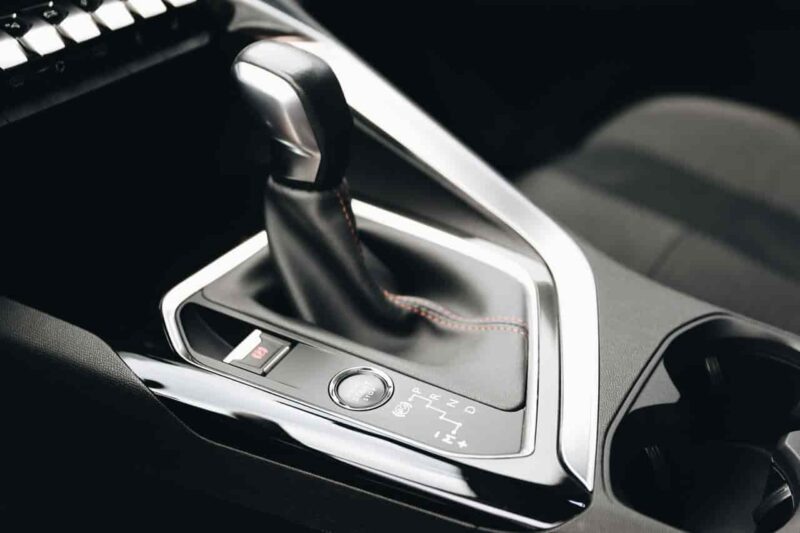
When a car won’t move but the engine runs, the problem is usually somewhere between the engine and the wheels. The engine may start normally and respond when you press the accelerator, but the vehicle remains stationary when you select Drive or Reverse. This can be caused by a transmission problem, broken axle, damaged driveshaft, clutch failure, parking brake issue, or another drivetrain fault.
Because some of these problems can become significantly more expensive if you continue driving, understanding the possible causes is important.
Low or Leaking Transmission Fluid
For vehicles with automatic transmissions, low transmission fluid is one of the first things to consider. Automatic transmissions depend on hydraulic pressure to engage gears and transfer engine power to the wheels.
A serious fluid leak can reduce the transmission fluid level enough that the vehicle will not move. You may notice reddish, brown, or dark fluid underneath the vehicle, although fluid color varies by vehicle and transmission type.
If the transmission suddenly stops engaging Drive or Reverse, check for visible leaks and have the fluid level inspected according to the manufacturer’s procedure.
Transmission Failure
A failed automatic transmission can prevent the vehicle from moving even though the engine operates normally. Internal components such as clutch packs, planetary gears, valves, or the torque converter can fail.
A transmission problem may be preceded by warning signs such as slipping, delayed engagement, harsh shifting, burning smells, unusual noises, or difficulty selecting gears.
If both Drive and Reverse fail to move the vehicle, a major transmission or drivetrain problem becomes more likely.
Broken CV Axle
Front-wheel-drive and many all-wheel-drive vehicles use CV axles to transfer power from the transmission or differential to the wheels. If a CV axle breaks, the engine can run and the transmission can engage, but power may not reach the wheels correctly.
A damaged CV axle can sometimes produce clicking, clunking, or grinding noises. However, a severe failure may simply result in a vehicle that does not move.
A broken axle can occur after an accident, impact with a pothole, severe wear, or mechanical failure.
Damaged Driveshaft
Rear-wheel-drive and some four-wheel-drive vehicles use a driveshaft to transfer power from the transmission to the differential.
If the driveshaft breaks or a critical component such as a universal joint fails, the engine may rev normally while the vehicle remains stationary.
A damaged driveshaft can produce loud clunking, vibration, or unusual noises before complete failure. If you suspect driveshaft damage, avoid driving the vehicle because a loose or broken driveshaft can create additional damage and safety risks.
Clutch Failure in a Manual Transmission
If your car has a manual transmission, a worn or failed clutch can prevent engine power from reaching the wheels.
A severely worn clutch may slip when accelerating, causing engine RPM to increase without a corresponding increase in vehicle speed. In a more serious failure, the clutch may fail to engage at all.
Other warning signs can include a burning smell, difficulty shifting, unusual clutch-pedal behavior, or a vehicle that refuses to move even though gears can be selected.
Also Read: Cloud Infrastructure Consulting
Faulty Gear Selector or Linkage
Sometimes the transmission itself is not the problem. A damaged gear selector cable, linkage, or electronic selector can prevent the transmission from actually entering the selected gear.
For example, the gear indicator may show Drive while the transmission remains in Park or Neutral.
A technician can inspect the selector mechanism and confirm whether the transmission is receiving the correct command.
Parking Brake or Stuck Brakes
A vehicle may also refuse to move because one or more brakes are severely seized. This is less likely if the car does not move at all, but it can happen after prolonged parking, corrosion, or brake component failure.
If the vehicle attempts to move but feels as though it is being held back, a stuck brake or parking brake may be responsible.
Do not repeatedly press the accelerator to force a vehicle with seized brakes to move. This can generate excessive heat and damage drivetrain components.
Differential Problems
The differential allows the drive wheels to rotate at different speeds while transferring power to them. Internal differential damage can prevent power from reaching the wheels properly.
A failing differential may produce whining, grinding, clunking, or other unusual noises. Severe damage can eventually leave the vehicle unable to move.
Differential problems can be especially important to consider when the transmission appears to engage normally but the wheels receive little or no power.
Electrical and Computer Problems
Modern vehicles rely heavily on electronic control systems. A transmission control module, sensor, wiring problem, or electrical fault can sometimes prevent normal transmission engagement.
A warning light may appear on the dashboard when an electronic problem is detected. Diagnostic scanning can reveal stored trouble codes and help determine whether the problem is electrical, hydraulic, or mechanical.
However, a diagnostic code should be treated as a starting point rather than automatic proof that a specific component has failed.
What to Do When Your Car Won’t Move
If the engine runs but the vehicle will not move, first make sure the parking brake is completely released and confirm that the transmission is actually selecting Drive or Reverse.
Look underneath the vehicle for obvious fluid leaks, but avoid getting underneath a vehicle that is not safely supported. Do not repeatedly rev the engine or attempt aggressive acceleration.
If the vehicle cannot move under its own power, having it transported to a qualified repair facility is generally safer than continuing to experiment with the drivetrain.
Conclusion
A car that won’t move but has a running engine usually has a problem with power transmission rather than engine operation. Common causes include low transmission fluid, transmission failure, broken CV axles, damaged driveshafts, clutch failure, seized brakes, differential problems, and electronic transmission faults.
Because several different problems can produce similar symptoms, professional diagnosis is often necessary. Addressing the issue quickly can help prevent additional drivetrain damage and potentially reduce repair costs.
