




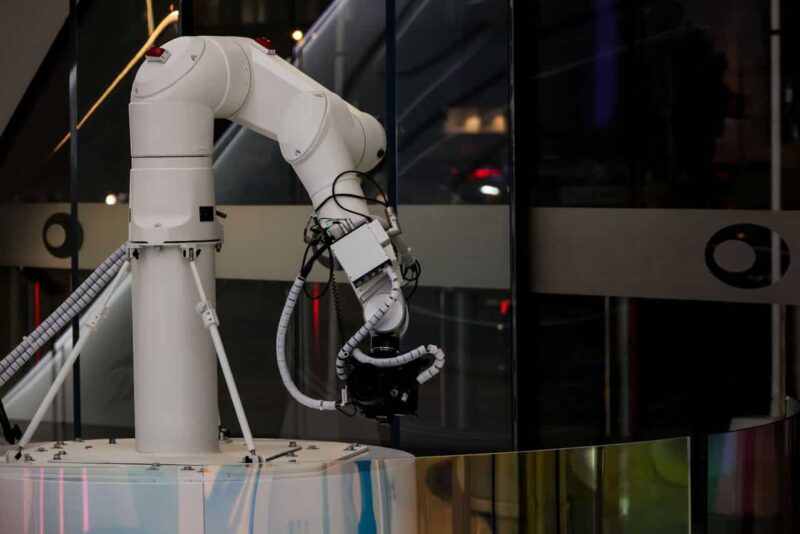
Artificial intelligence is rapidly changing how businesses operate, compete, and serve customers. From automated customer support to predictive analytics and intelligent workflow automation, AI can improve nearly every area of an organization. However, successfully adopting AI requires more than purchasing software or adding a chatbot to a website. Businesses need the right technology, strategy, data, integrations, and ongoing support.
This is where AI implementation services become valuable. AI implementation providers help organizations identify practical AI opportunities, select suitable technologies, integrate AI into existing systems, and ensure employees can use new solutions effectively.
What Are AI Implementation Services?
AI implementation services are professional services designed to help businesses plan, deploy, integrate, and manage artificial intelligence solutions. These services can range from developing AI strategies and selecting AI platforms to integrating machine learning models, generative AI tools, automation systems, and analytics platforms.
An AI implementation project typically begins by understanding a company’s business objectives. Instead of implementing AI simply because it is a popular technology, businesses can focus on specific problems where AI can produce measurable results.
Common implementation areas include customer service, sales, marketing, finance, human resources, cybersecurity, operations, document processing, and data analysis.
Why Businesses Need AI Implementation Services
Implementing AI without a clear strategy can lead to wasted resources, security problems, poor integration, and low employee adoption. Professional AI implementation services can help organizations avoid these challenges.
Experienced AI specialists can evaluate existing workflows and determine where artificial intelligence can deliver the greatest value. They can also help businesses establish realistic goals, select appropriate tools, and create an implementation roadmap.
For companies with limited internal AI expertise, an implementation partner can provide technical knowledge without requiring the business to build a large AI team from scratch.
Key AI Implementation Services
AI Strategy and Consulting
AI implementation often starts with strategy. Consultants evaluate business processes, existing technology, available data, and organizational goals to identify suitable AI opportunities.
A strong AI strategy can prioritize projects based on potential return on investment, complexity, security requirements, and business impact. This allows companies to start with practical use cases before expanding AI across the organization.
Also Read: Roof Replacement Financing – Guide
AI Software Integration
Many businesses already use CRM platforms, accounting software, enterprise applications, customer service systems, and cloud platforms. AI solutions need to work with these existing technologies.
AI implementation specialists can connect AI applications with existing business systems through APIs, integrations, databases, and automation platforms. Proper integration allows information to move efficiently between systems while reducing repetitive manual work.
Generative AI Implementation
Generative AI is becoming an important business technology for creating content, analyzing information, summarizing documents, assisting employees, and answering questions.
Businesses can implement generative AI assistants for internal knowledge management, customer service, marketing content, sales support, and document analysis. Implementation providers can help configure these systems according to company requirements while considering data privacy and access controls.
Machine Learning Solutions
Machine learning can help businesses identify patterns and make predictions using historical data. Applications may include demand forecasting, fraud detection, customer segmentation, predictive maintenance, and sales forecasting.
AI implementation services can cover data preparation, model development, testing, deployment, and performance monitoring.
AI Automation
One of the most valuable applications of AI is business process automation. Companies can use AI to automate repetitive tasks such as data entry, document classification, email processing, customer inquiries, appointment management, and reporting.
Combining AI with workflow automation can reduce manual workloads and allow employees to focus on higher-value responsibilities.
Benefits of AI Implementation
A well-planned AI implementation can provide several business benefits.
Improved efficiency is one of the most immediate advantages. AI can complete repetitive tasks faster and operate continuously, helping organizations process larger volumes of work.
Reduced operational costs can result from automating manual processes and improving resource utilization.
Better customer experiences can come from faster responses, personalized recommendations, intelligent support systems, and 24/7 automated assistance.
Data-driven decision-making is another major advantage. AI can analyze large amounts of information and identify trends that may be difficult to detect manually.
AI can also support business scalability. Automated systems can handle increasing workloads without requiring organizations to increase staffing at the same rate.
How the AI Implementation Process Works
A successful AI implementation usually follows several stages.
First, businesses define their objectives and identify problems that AI could solve. Next, specialists assess the organization’s data, technology infrastructure, security requirements, and workflows.
The next step is solution selection and development. Depending on the project, this may involve configuring an existing AI platform, integrating third-party software, or developing a customized AI application.
Before full deployment, the solution should be tested carefully. Testing helps identify performance issues, integration problems, security risks, and user-experience concerns.
After deployment, employees should receive appropriate training. AI systems also require continuous monitoring because business requirements, data, and AI technologies can change over time.
Choosing the Right AI Implementation Partner
Selecting the right AI implementation company is important because every business has different requirements. Companies should evaluate a provider’s technical expertise, industry experience, integration capabilities, security practices, and post-implementation support.
It is also useful to choose a provider that focuses on measurable business outcomes rather than simply recommending the newest AI technology.
Businesses should ask potential providers how they handle data privacy, system integration, model monitoring, employee training, and long-term maintenance.
AI Implementation Best Practices
Businesses can improve their chances of success by starting with clearly defined use cases. Instead of attempting to implement AI across every department simultaneously, organizations can begin with one or two high-value projects.
Data quality should also be a priority. AI systems depend heavily on accurate, relevant, and properly structured information.
Security and privacy should be considered throughout the implementation process. Organizations should establish appropriate access controls, data policies, monitoring procedures, and governance standards.
Finally, AI adoption should involve employees. Providing training and explaining how AI will support their work can improve adoption and reduce resistance to new technology.
The Future of AI Implementation
AI adoption is expected to continue expanding as businesses discover new ways to automate processes, analyze information, and improve customer experiences. Generative AI, intelligent automation, predictive analytics, and AI-powered business applications are likely to become increasingly integrated into everyday operations.
For businesses, the goal should not simply be to adopt AI but to implement it strategically. The organizations that combine the right technology with quality data, strong governance, effective integration, and employee adoption are better positioned to achieve lasting results.
Conclusion
AI implementation services provide businesses with the expertise needed to move from AI experimentation to practical deployment. From strategy and software integration to automation, generative AI, machine learning, and ongoing optimization, these services can help organizations use artificial intelligence effectively.
A successful AI implementation starts with clear business objectives and focuses on measurable improvements. By choosing the right solutions and implementing them responsibly, businesses can increase efficiency, reduce costs, improve customer service, and create new opportunities for long-term growth.
