

A suspension clunking noise can be an early warning sign that something is worn, loose, or damaged underneath your vehicle. The sound may appear when driving over bumps, turning the steering wheel, braking, accelerating, or traveling on rough roads. While some suspension noises may be minor, others can indicate components that affect vehicle handling and safety.
Understanding the common causes of suspension clunking noise can help you identify the problem and determine when professional inspection is necessary.
What Does Suspension Clunking Sound Like?
A suspension clunk usually sounds like a dull knocking, tapping, or metallic “clunk” coming from underneath the vehicle. It may occur once when the suspension moves or repeatedly when driving over a series of bumps.
The location of the noise can provide useful clues. A clunk from the front may involve control arms, sway bar links, struts, ball joints, or steering components. A noise from the rear may involve shocks, bushings, suspension links, or other mounting components.
Common Causes of Suspension Clunking Noise
1. Worn Sway Bar Links
Sway bar links connect the stabilizer bar to the suspension. When their joints or bushings become worn, they can develop excessive movement.
This often produces a noticeable clunk when driving over small bumps, potholes, or uneven surfaces. Sway bar link problems are relatively common because these components experience frequent movement.
2. Worn Control Arm Bushings
Control arms connect the suspension to the vehicle’s frame or subframe. Rubber or polyurethane bushings help absorb movement and vibration.
When these bushings crack, deteriorate, or become excessively worn, the control arm can move more than intended. This may produce clunking noises, steering instability, uneven tire wear, or changes in handling.
3. Bad Ball Joints
Ball joints allow suspension components to move while maintaining a connection between the control arm and steering knuckle.
A worn ball joint can cause clunking, particularly when the vehicle travels over bumps or when steering. Other symptoms may include loose steering, vibration, uneven tire wear, or changes in vehicle handling.
Because a severely damaged ball joint can affect steering and wheel control, it should be inspected promptly.
4. Damaged Struts or Shocks
Struts and shocks control suspension movement and help keep the tires in contact with the road.
A worn shock absorber or strut may cause knocking or clunking, particularly when driving over rough surfaces. You may also notice excessive bouncing, poor handling, uneven tire wear, or fluid leaking from the shock or strut.
The upper strut mount can also produce noise when it becomes worn or damaged.
5. Loose Suspension Hardware
Not every suspension clunk is caused by a worn component. Loose bolts, nuts, brackets, or mounting hardware can also create knocking sounds.
A component that has been recently replaced may produce noise if it was not tightened correctly. Suspension hardware should be checked using the manufacturer’s recommended torque specifications.
6. Worn Stabilizer Bar Bushings
Stabilizer bar bushings hold the sway bar in place while allowing controlled movement.
When these bushings deteriorate, the bar can move against its mounting points and create a clunking or knocking noise. The sound may be especially noticeable when driving over uneven roads or making turns.
7. Broken or Damaged Springs
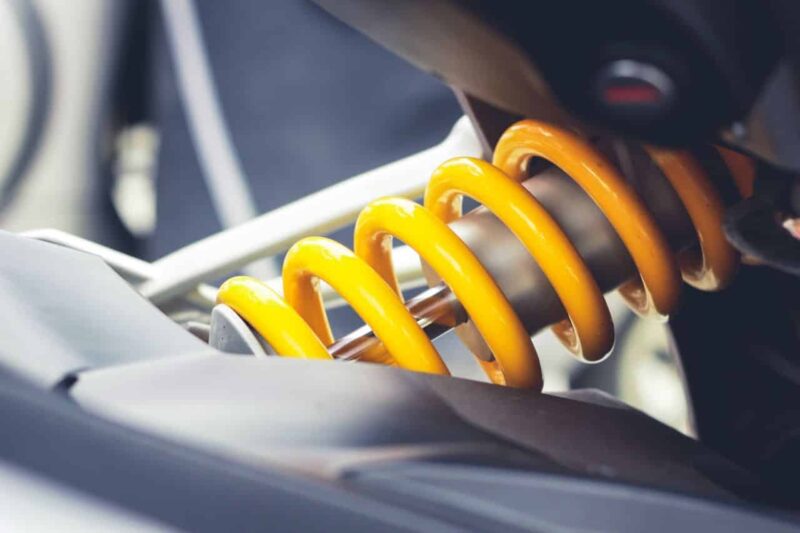
Coil springs support the vehicle’s weight. A cracked or broken spring can cause unusual noises and may change the vehicle’s ride height.
A damaged spring can also affect handling and tire clearance. If one corner of the vehicle sits noticeably lower than the others, the suspension should be inspected immediately.
Also Read: Transmission Maintenance – Guide
When Does the Clunking Noise Occur?
The conditions under which the noise appears can help narrow down the cause.
If the clunk occurs mainly when driving over bumps, sway bar links, bushings, shocks, struts, or other suspension components may be involved.
If it happens when turning, possible causes include ball joints, strut mounts, tie-rod components, or other steering and suspension parts.
A clunk during braking or acceleration may indicate excessive movement in control arm bushings or other suspension mounting components.
How Is Suspension Clunking Diagnosed?
A mechanic typically begins with a visual inspection of the suspension. The vehicle may then be raised so components can be examined for excessive movement, damaged bushings, leaking shocks, loose hardware, or broken springs.
A road test is also useful because the mechanic can reproduce the noise under controlled conditions.
Some problems require specialized tools to detect play in ball joints, tie rods, wheel bearings, or suspension components. A complete diagnosis should identify the source of the noise rather than simply replacing parts based on symptoms.
Can You Drive With a Suspension Clunk?
It depends on the cause and severity of the problem. A minor bushing or sway bar link issue may not immediately prevent the vehicle from being driven, but continued driving can allow the component to deteriorate further.
If the clunk is accompanied by loose steering, severe vibration, pulling, uneven tire wear, a visibly broken component, or significant changes in handling, avoid unnecessary driving and have the vehicle inspected promptly.
How to Prevent Suspension Problems
Regular inspections can help identify worn suspension components before they become serious. Check tires regularly, maintain proper tire pressure, avoid excessive speeds over potholes, and have unusual noises investigated early.
During routine maintenance, ask a qualified technician to inspect suspension and steering components for wear or damage.
Final Thoughts
A suspension clunking noise should not be ignored, especially when it becomes louder or is accompanied by handling problems. Common causes include worn sway bar links, control arm bushings, ball joints, shocks, struts, stabilizer bar bushings, loose hardware, and damaged springs.
Identifying the exact source requires careful inspection and, in many cases, a road test. Addressing suspension problems early can help prevent additional damage and maintain safe, predictable vehicle handling.
